One of the best things about working with someone or a couple on their estate plan is that a primary goal is usually to take care of their children, grandchildren, and other loved ones. I enjoy getting to know the families, hearing their stories, and helping them make sure future generations will be protected and cared for.
Because their focus is on others, many clients do not think about making sure they are cared for during their lifetimes and during any periods of incapacity. This is equally important, if not more important, than taking care of others. Too many times since COVID-19 pandemic started, I have received heart-wrenching phone calls from children whose parents have become ill. They want to know how they can help take care of their parents’ finances, who is the proper person to make medical decisions, or how do they make end of life care decisions.
Nobody wants to contemplate these types of issues. I don’t like to think about them for myself or my family either. What we learned during COVID-19 pandemic is that things can change in an instant. It is so important to put documents in place to give authority to those who will be decision-makers if someone becomes incapacitated. Once those documents are together, it is time for another uncomfortable yet critical step. It is vitally important to talk to the decision-makers about your wishes so, if they are needed, they can be as prepared as possible.
Providing for your family means more than figuring out how to distribute your assets. It also means giving them the tools to make sure you are cared for during your lifetime.
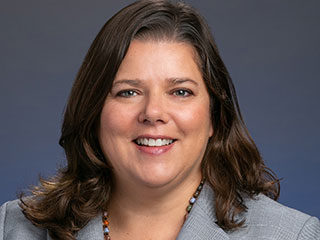
Lisa is well versed in challenges faced by small businesses and their owners. Her unique prospective benefits her business clients with agreements, employment advice, copyright violations and succession planning. She also assists families with estate planning not only guiding them through the estate planning process but also understanding why this is so vital to their families.
If you’re like most people, there is a laundry list of things you’d rather do than think about your estate plan. While it can be a challenging area to discuss, your estate plan is essential to ensure you and your family are protected and cared for, and that your assets are distributed as you wish at your death. While estate planning is not one-size-fits-all, it will be helpful to familiarize yourself with the documents that are often included in estate plans. Your attorney will work with you to customize these documents to meet your specific estate planning goals.
An effective estate plan includes documents to:
Care for your financial and health care needs while you are living,
Care for your family and loved ones per your instructions, and
Distribute your assets after your death.
Revocable Living Trust
A trust is often the cornerstone of your estate plan. Your trust will be used to manage most of your assets during your lifetime, during any periods of incapacity, and after your death.
One benefit of a trust is that it is very flexible and customizable. Upon your death, your trust will include instructions regarding how you would like your assets distributed. For example, your trust can provide for education and health care for your children or grandchildren, but delay principal distributions until they reach particular ages or achieve certain accomplishments. In addition, protection can be added to prevent your children or grandchildren from accessing trust assets if they are having creditor issues, substance abuse issues, going through a divorce, or other similar circumstances.
Another benefit of a trust is that assets owned by your trust avoid probate. Probate is the court supervised process for determining the validity of a Last Will and Testament (if one exists), and managing and distributing probate assets. Probate is often costly and time-consuming, and should be avoided if possible. One of the best ways to avoid probate is to title your appropriate assets to your trust.
Common terms you may find in your Trust:
Revocable Living Trust – The trust is Revocable, which means you will be able to revoke or amend the trust during your lifetime. Since you are creating your trust during your lifetime, it is a Living trust. Another type of trust can be created through your Last Will and Testament at your death (called a testamentary trust).
Settlor – The Settlor, also called a Trustor, is the person(s) who created the trust and who transferred assets to the trust. You, and your spouse if a joint trust, will be the Settlors of your trust.
Trustee – The Trustee is the person(s) or institution who manages your trust assets, including making necessary decisions regarding the trust. You, and your spouse if a joint trust, will likely be the initial Trustees of your trust. You will name successors to serve in your place if you are unable to continue serving as Trustee.
Last Will and Testament
Your Will is only effective at your death, which means it cannot be used to manage your assets if you become incapacitated. If your estate plan includes a Revocable Living Trust, your Will is a “Pour-Over Will,” which takes assets outside of your trust at your death and transfers them to your trust. If your estate plan does not include a Revocable Living Trust, your Will will be used to manage your probate estate and distribute your assets at your death. Assets in either a Pour-Over Will or a traditional Will need to go through probate before they are distributed.
Your Will also names a Guardian or Conservator for your minor or incapacitated children.
Common terms you may find in your Will:
Testator/Testatrix – The person who makes the Will. Testator can be used for either a male or a female; Testatrix is used only for a female.
Personal Representative – In Arizona, the Personal Representative, also called an Executor, is the person you nominate in your Will, and who is appointed by the court, to carry out the responsibilities and terms of your Will.
Guardian – The Guardian is the person you nominate, and who is appointed by the court, to care for your minor or incapacitated children.
Conservator – The Conservator is the person you nominate, and who is appointed by the court, to oversee the finances for your minor or incapacitated children.
Power of Attorney
Your Power of Attorney, also called a Durable Power of Attorney or Financial Power of Attorney, is the document used to name an Agent to manage your finances and assets outside of your Trust during any periods when you are incapacitated. Besides managing assets, a properly drafted Power of Attorney will allow your Agent to manage areas not commonly considered, such as dealing with your utilities or mail. Your Agent has a duty to manage your assets for your benefit and must follow the guidelines and powers you grant in the Power of Attorney. You may choose to give your Agent an immediate power, or have it come into effect only upon your incapacity.
Common terms you may find in your Power of Attorney:
Durable – Your Power of Attorney is Durable if it remains valid and is not impacted by the passage of time.
Agent – Your Agent is the person you name in your Power of Attorney to manage your finances during your incapacity.
Health Care Power of Attorney/Mental Health Care Power of Attorney
Your Health Care Power of Attorney gives your Agent, sometimes called Health Care Agent, the power to make medical decisions on your behalf if you are unable to do so yourself. Your Agent will be given the power to consent or refuse treatment, medications, and procedures on your behalf. Your Agent will also be able to hire health care personnel, procure health care equipment, and review your medical records. Your Agent has the responsibility of making the decisions consistent with any wishes you have made known.
Your Health Care Power of Attorney may contain a Mental Health Care Power of Attorney, or the Mental Health Care Power of Attorney may be a separate document. The Mental Health Care Power of Attorney gives your Agent the power to make mental health care decisions on your behalf, similar to those allowed in the Health Care Power of Attorney. In Arizona, you are required to specifically initial in your Mental Health Care Power of Attorney if you wish to allow your Agent to admit you to an inpatient psychiatric facility.
Common terms you may find in your Health Care Power of Attorney:
Agent – Your Agent is the person you name in your Health Care Power of Attorney/Mental Health Care Power of Attorney to make health care/mental health care decisions on your behalf if you are unable to do so yourself.
Living Will
Your Living Will, also called an Advance Directive, is the document in which you specify what, if any, life-sustaining interventions you may want if your death is imminent or if you are in a permanent vegetative state. This important document will give your Health Care Agent guidance about what decisions you would want made under different circumstances.
Having a basic understanding of common estate planning documents can help you begin thinking about your estate plan. However, your estate planning attorney will guide you through the process and help you determine the best plan to ensure you are protected and your needs are met.
Lisa Paine is an estate planning and business law attorney at the Phoenix law firm of Jaburg Wilk. She assists clients with estate planning, probate, trust administration and corporate business needs.
Creating a will, trust, or any type of estate plan has always involved dealing with an uncertain future. Consider that just 20 years ago in 1997, the estate tax had an astonishing 55% rate with only a $600,000 exemption. Back then, tax-driven estate planning was a mathematical necessity for a large segment of the population.
Fast forward to 2017. Not only do we now have a generous $5.49 million exemption and a lower 40% rate, we also have renewed emphasis and action from the President and Congress on repealing the estate tax, as evidenced by the September 27, 2017 Unified Framework for Fixing Our Broken Tax Code and by the House of Representatives bill released on November 22, 2017, The Tax Cuts and Jobs Act. So what does this mean for you, as you’re planning for the future?
Estate Tax Repeal Means No Need to Plan…Right?
Nothing could be further from the truth! Although there was a lot of tax-driven planning in the past, in recent years estate planning has largely focused on preserving family unity, protecting assets, ensuring privacy, and effectively passing along financial and emotional legacies.
And, for those with high net worth, it’s also worth mentioning that estate tax repeal isn’t a foregone conclusion at this point either. The proposed changes still must be crafted into legislation that must pass both houses of Congress and then be signed by the President. Given the political division the country faces (and the likely stiff opposition to the President’s tax proposal from Congressional Democrats), this will be no small feat.
While we wait for Congress to act, it’s also worth noting that the estate tax was already effectively repealed for more than 99% of American estates when the exemption was raised to $5 million (and indexed for inflation) in 2010. The vast majority of estates fall below this threshold and need no special planning to avoid the estate tax. But don’t think you’re out of the woods because you have less than $5 million.
Today, the focus of estate planning has shifted away from death taxes to other concerns that affect most families. Estate planners can now work with you to protect you and your family against costly, public probate, guardianship, or conservatorship court proceedings and also further your legacy goals.
You might be worried about some of these things happening to your family:
A financially irresponsible child or grandchild wasting their inheritance simply because they lack the financial maturity to handle wealth.
A divorcing spouse of one of your heirs taking advantage of family wealth.
Family discord lurking under the surface that tears your family apart, especially after the death of the patriarch or matriarch.
A lawsuit, judgment, or bankruptcy that causes your family to lose their inheritance.
Alzheimer’s or another cognitive impairment affecting you or someone else in your family.
Luckily, there are well-developed, flexible legal strategies (such as lifetime trusts, standby special needs trusts, and robust incapacity planning, to name a few) for overcoming these issues. Although estate planning can’t necessarily repair a damaged family relationship, proper planning can help make sure it does not get any worse. But these strategies are only effective when you work with a qualified estate planner to implement or refresh your will, trust, and estate plan.
So, there’s no crystal ball. Where should I go from here?
According to WealthCounsel’s 2016 Estate Planning Literacy Survey, about 74% of Americans find estate planning to be a confusing topic. So, you’re not alone if you’re unsure about your next steps. I’m here to help.
If you don’t yet have a will or trust, now is the time to explore getting one. If you have an “old” will or trust, now is the time to talk with me about whether you need an update. Modern families need modern estate planning solutions, and I am ready to help you create a flexible estate plan that works now, and will work in the future, even if the current tax laws change (even though no one has the proverbial crystal ball).
Lisa is well versed in challenges faced by small businesses and their owners. Her unique prospective benefits her business clients with agreements, employment advice, copyright violations and succession planning. She also assists families with estate planning not only guiding them through the estate planning process but also understanding why this is so vital to their families.
When you hear the phrase “estate plan,” you might first think about paperwork. Or your mind might land on some of the uncomfortable topics that estate planning confronts head-on: end-of-life decisions, incapacity, and your family’s legacy from generation to generation. Those subjects hit home for everyone.
But while that could feel like a reason to avoid estate planning, the emotional nature of these decisions is actually a reason to embrace the process with enthusiasm. Here are a few ways in which emotion in estate planning is a good thing:
1. Estate planning creates stability in times of loss
If you end up in a state of incapacity later in life, it’s guaranteed to be a difficult time for your family. If your estate plan doesn’t include detailed instructions for a trusted decision maker and an actionable long-term care plan, it’s guaranteed to be even worse. You can save your loved ones from the confusion about what to do and the pressure to make rushed choices if this occurs, allowing them to save their energy for caring for you and your family.
Detailed, trust-based estate planning with keeps your private matters out of the public eye. When your estate plan is scant, you’re running the risk of your estate going through court in a proceeding called probate. This means that choices become visible to those outside your inner circle. Because of the notice requirements, probate can also invite controversy and conflict which a private transfer would have avoided.
3. Estate planning can bring a family together
Everyone has heard of a situation in which siblings argued over what their parents left them as beneficiaries. But the opposite is also quite true. When you get your family and other loved ones involved in your estate planning process, you gain a wonderful opportunity to show them how much you care. Creating your estate plan can strengthen the bonds of love in a family and serve as a reminder of those bonds for years to come.
4. Your estate is about much more than money
Estate planning is about a whole lot more than just wealth distribution and taxes. During an estate planning session, we can talk about significant family heirlooms, your hard-won hobby collection, and other matters totally unique to your life. We can even look into the memories and intellectual property you want to make sure your beneficiaries receive, such as photos, art, and even recorded videos or audio files of family stories you’d like to share with future generations.
5. An estate plan means you’re not going it alone
You shouldn’t have to face trying times alone. Whether the estate in question is yours or a loved one’s, your estate planning attorney will have the answers. Let us take care of the nuts and bolts with regards to educating your appointed agents about their duties so you can know that your family will be in good hands if anything happens to you. The idea of setting everything straight on your own can be a stressful one, but these emotional decisions are much easier to make with a trusted advisor by your side.
We want you to feel ownership and investment in getting your estate plan to reflect who you are. Estate planning is an opportunity to look at some of life’s big questions and ultimately make sure your family feels your care for them through the choices you make. Give this office a call today to see how we can create custom-made solutions that do just that.
Lisa is well versed in challenges faced by small businesses and their owners. Her unique prospective benefits her business clients with agreements, employment advice, copyright violations and succession planning. She also assists families with estate planning not only guiding them through the estate planning process but also understanding why this is so vital to their families.
When you hear the term “Estate Planning”, do you think:
“I don’t need an estate plan because I don’t have very much,”
“My wishes are simple, I can just jot down what I need,”
“I know someone who said they used a Will template off the Internet and said it was great,”
“Why should I care about estate planning since I’m going to be dead anyway?”
Or perhaps you just want to avoid the topic altogether.
If you relate to any of these thoughts, you are not alone.
But why are these thoughts risky?
You do not have to own a large vista on the hills overlooking the Pacific Ocean to have an estate. An estate is simply a term to describe everything you own – your money, property, and personal belongings are all part of your estate. An Estate Plan helps you determine what will happen to these things once you are no longer able.
However, a complete Estate Plan goes far beyond dispersion of your assets and belongings. An effective Estate Plan also includes areas such as caring for your family, making health care decisions, avoiding probate and estate taxes, protecting your assets, and addressing specific concerns for distributions.
Questions that may arise during a comprehensive Estate Planning meeting are:
Family
Who will care for your minor children? Is there anyone you do not want caring for your children?
Do you want the same person who is caring for your children in charge of your assets for your children or should you appoint a trustee?
How can you make sure your youngest child is provided for in the same manner as your oldest?
How can your special needs child or dependent be cared for?
Healthcare
Who should make healthcare decisions for you if you are unable?
What types of healthcare interventions do you want?
Estate Taxes and Probate
How can you avoid or minimize your estate taxes?
How can you avoid having your estate go through probate – which can be a time-consuming and costly process?
Asset Protection
What is the best way to ensure that your property doesn’t fall into the hands of creditors?
Is there a way to distribute assets to your beneficiaries over time instead of handing over a lump sum?
Who will manage your finances if you are unable?
Who will manage your small or family-owned business?
Distribution Concerns:
What are some different options for splitting your estate among your beneficiaries?
How can you take care of your spouse, but ensure that money also goes to your children?
Sitting down with a qualified Estate Planning attorney can help you answer these important questions and many more. In order to ensure full protection of your estate for your loved ones and yourself, you do not want to depend on a fill-in-the-blank template. Instead, you want to meet with someone who knows key questions to ask to ensure your plan provides you and your loved ones with the comfort and peace of mind that comes with knowing you have your affairs in order.
Please call or email this office to schedule your free 30 minute consultation to discuss ways to protect you and your family.
Lisa is well versed in challenges faced by small businesses and their owners. Her unique prospective benefits her business clients with agreements, employment advice, copyright violations and succession planning. She also assists families with estate planning not only guiding them through the estate planning process but also understanding why this is so vital to their families.